
Why Grand Theft Auto Is So Popular


Grand Theft Auto has lasted because it gives players something most games only promise: a world that feels like it will keep moving even when the player stops caring about the main mission.
A player can drive across the city, follow the story, start chaos, obey traffic laws for no reason, look for hidden details, listen to the radio, buy clothes, steal a helicopter, or simply watch pedestrians argue on the sidewalk. The series is famous for crime, controversy, and satire, but its deeper appeal is psychological. It taps into freedom, power, identity, curiosity, and escape with unusual force.
That does not mean every player likes it for the same reason. Some come for the story. Some come for the cars. Some come for the absurdity. Some like the feeling of being dropped into a giant toy box where rules can be tested without real-world harm. The result is a rare mix of fantasy and familiarity, a place that feels close enough to real life to understand, but unreal enough to survive almost any bad decision.
The open world gives players a rare feeling of freedom
Most entertainment asks people to follow a path. A movie has a fixed ending. A novel moves in one direction. Many games offer choices, but those choices still happen inside narrow lanes. Grand Theft Auto became different because it made the player feel unstructured.
That freedom matters. People enjoy autonomy, the feeling that they are choosing their own actions instead of being pushed. In psychology, autonomy is often linked to motivation and satisfaction. GTA gives that feeling constantly.
The mission marker is there, but it can wait. The game says, in effect, “Here is the city. What do you want to do first?”
That simple design choice changes the emotional experience. The player does not feel like a passenger. The player feels like an agent.
Freedom in GTA is not only about the big map. It is also about small decisions:
Taking a shortcut through an alley
Switching radio stations while driving
Choosing a vehicle based on mood
Ignoring the story to explore a beach, mountain, or back road
Creating accidental stories through physics, traffic, and police chases
These moments create what players often remember most. Not just the scripted missions, but the time a getaway failed because a truck blocked the street. The time a plane landed badly and somehow survived. The time a quiet drive turned into a five-minute chase because of one reckless turn.
The game’s best trick is that it makes the player feel like the author of those moments. Even when the system caused half of it, the memory feels personal.
That is why open-world design is so powerful. It creates ownership of experience. Players are not just completing content. They are collecting stories that feel like theirs.
Power fantasy makes ordinary limits disappear
For most people, daily life is full of limits. Money is limited. Time is limited. Bodies have limits. Laws and social norms shape behavior. GTA removes many of those constraints and gives the player a strange kind of power.
This is not only about violence, though violence is part of the series’ reputation. The larger fantasy is control. The player can move fast, take risks, recover from disaster, and try again. Failure is temporary. Consequences exist inside the game, but they are contained.
That containment is key. GTA creates a space where players can do things they would never do, and should never do, in real life. The appeal is not always a desire to harm. Often, it is a desire to break pressure. The game answers a quiet question: what would happen if the normal rules stopped applying for a while?
In real life, a bad decision can carry lasting damage. In GTA, a bad decision becomes spectacle. The car flips, the sirens start, the player laughs, restarts, or escapes. The emotional loop is quick and clean.
This gives players a safe way to explore impulses like risk, rebellion, and control. Games have always done this in different forms. Racing games let people drive at impossible speeds. Fighting games let people compete through stylized combat. Strategy games let people control armies. GTA combines several fantasies at once.
The player can be:
A driver
A criminal
A survivor
A stunt performer
A collector
A tourist
A chaos agent
A character in a dark comedy
That variety gives the power fantasy more range. One hour can feel like an action movie. The next can feel like a road trip. The next can feel like a parody of American culture.
Power in GTA also comes from mastery. At first, the city feels overwhelming. Over time, players learn its roads, systems, weapons, vehicles, and shortcuts. That learning creates competence. The player starts to think, “I know how this world works.”
That feeling is deeply satisfying. A difficult escape becomes easier. A wild stunt becomes repeatable. A confusing city becomes familiar. The player gains not only in-game money or progress, but confidence inside the world.

Escape works because the world is familiar and exaggerated
Grand Theft Auto is not pure fantasy. It does not take place in a kingdom of dragons or on a distant planet. Its cities are exaggerated versions of places people recognize, especially American cities shaped by cars, money, media, crime, fame, and inequality.
This familiarity makes escape easier. The world looks close enough to understand at a glance. There are highways, fast food places, suburbs, beaches, stores, apartments, talk radio shows, billboards, and traffic jams. The player does not need a manual to know what a city street is for.
Then the game bends that reality into satire. Everything becomes louder, ruder, stranger, and more absurd. Media personalities are more shameless. Corporations are more ridiculous. Criminals are more theatrical. The city becomes a funhouse mirror.
That mirror matters because satire gives the player emotional distance. GTA is not only asking players to act out criminal fantasy. It is also mocking the world that produces greed, status obsession, violence, corruption, and nonstop entertainment.
The player escapes into a world that still comments on the real one.
That mix creates a special tone. The game can be thrilling, funny, ugly, clever, and uncomfortable within minutes. A serious mission might be followed by a ridiculous radio ad. A huge crime might happen in a city where everyone else seems distracted by celebrity gossip, consumer culture, or petty arguments.
This is part of why the series stays in public conversation. It is designed to provoke. Sometimes that provocation is sharp. Sometimes it is crude. Sometimes it succeeds. Sometimes it overreaches. But it rarely feels neutral.
Escape also works because the world invites wandering. Many games make empty space feel like a hallway between objectives. GTA makes movement itself entertaining. Driving has rhythm. The radio fills the silence. Weather changes the mood. The map becomes a place to inhabit, not just a checklist.
When players say they like “just driving around,” that is not a small detail. It is central to the psychology of the series. Driving gives light focus. The hands are busy, the eyes roam, the mind relaxes. It can feel almost meditative, even inside a violent game.
A player might start with no plan and end with a personal little story. That is escape at its strongest: not disappearing from reality entirely, but entering a space where ordinary attention loosens.
The game lets players try on identities
GTA also succeeds because it plays with identity. The player is both themselves and not themselves. They control a character with a written personality, but they also make choices moment to moment. That creates a split identity that games handle better than most media.
A player might follow the character’s criminal ambitions in the story, then spend twenty minutes choosing clothes, customizing a car, or buying property. The result is part role-play, part self-expression.
This matters because people enjoy safe identity play. A game can let someone experiment with boldness, recklessness, style, humor, or aggression without turning those traits into real behavior. The screen creates distance. The controller creates permission.
GTA characters are often morally compromised, but they are rarely blank. They have desires, grudges, fears, and contradictions. That makes players react to them, not just use them. Some players identify with a character’s hunger for status. Some enjoy the comedy. Some feel tension between what the character wants and what they personally believe.
That tension is one reason the series feels more psychologically interesting than a simple crime simulator. The stories often revolve around people chasing control in systems that keep humiliating them. They want money, respect, safety, revenge, freedom, or fame. Those motives are extreme in the game, but recognizable in human life.
The same is true of status. GTA is obsessed with status symbols: cars, homes, neighborhoods, clothes, weapons, and social rank. The player sees how objects become identity markers. A better vehicle is not just faster. It feels like advancement. A new safehouse is not just a menu point. It feels like arrival.
This taps into a real social instinct. People read status everywhere. GTA exaggerates that instinct until it becomes comedy and critique.
The series also gives players multiple emotional masks. In one session, a player can be stylish, cruel, skilled, foolish, lucky, reckless, or calm. A mission might demand precision. Free roam might invite absurdity. The game does not force one stable self.
That flexibility keeps the experience fresh. Players return because the same city can produce different versions of them.
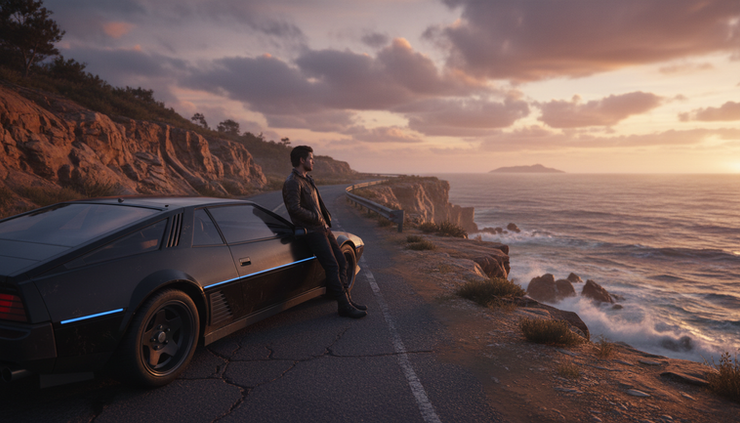
Chaos, comedy, and social play make the memories stick
A huge part of GTA’s popularity comes from unpredictability. The game’s systems collide in funny ways. Traffic, pedestrians, physics, police response, mission rules, and player decisions can create scenes that feel unscripted.
This creates surprise, and surprise creates memory.
People often remember the moments that broke the plan. A perfect mission is satisfying, but a messy escape can become legendary. The player barely makes it across a bridge. A random car ruins everything. A motorcycle crash becomes slapstick. A serious scene turns absurd because the player arrived in a ridiculous outfit.
Comedy softens the violence and makes the world more shareable. Players retell stories because they sound like jokes. “I tried to do one simple thing, and then everything went wrong” is one of the oldest comic structures in entertainment. GTA generates that structure naturally.
This is also why the series became so social. Long before online modes became central, people gathered around GTA as a shared experience. One person held the controller while others suggested terrible ideas. Try the jump. Steal the tank. See if you can land on that building. The game made spectators feel involved because the outcome was uncertain and easy to understand.
Online play expanded that appeal. Friends could turn the open world into a stage for races, heists, stunts, arguments, and nonsense. The planned content mattered, but the unplanned moments often mattered more.
The psychology here is simple: shared chaos bonds people. When a group experiences surprise together, the story becomes social glue. GTA is built to create those stories.
The game also rewards curiosity. Players wonder:
What is over that hill?
Can this vehicle make that jump?
What happens if I interrupt this scene?
Can I escape with only one tire left?
Will the game react if I do something strange?
Curiosity keeps the player active. The world feels less like a finished object and more like a machine to poke. That is one reason the series has such long life. Even after the story ends, players keep testing the world.
Critics sometimes reduce GTA to shock value. Shock is part of the brand, but it is not enough to explain decades of interest. Many shocking games fade. GTA stays popular because shock sits inside a larger loop of freedom, mastery, comedy, and personal storytelling.

The real reason GTA lasts
The reason Grand Theft Auto is so popular is not one feature. It is the way several psychological rewards stack together.
It gives freedom, then fills that freedom with toys. It gives power, then makes that power funny and unstable. It offers escape, but keeps the world close enough to feel recognizable. It lets players try on identities, then surrounds those identities with status, danger, satire, and choice.
Most of all, GTA understands that players do not only want to be told a story. They want to create one through action. The series gives them a city, a car, a radio station, a bad idea, and enough systems for something memorable to happen.
That is the lasting appeal. Grand Theft Auto is not popular simply because it lets people break rules. It is popular because it turns rule-breaking, wandering, failing, joking, striving, and exploring into personal experience. The player leaves not just with progress, but with stories that sound like they could only have happened to them.


